
Since the DEA has changed its regulations on reporting theft or significant loss of controlled substances, numerous pharmacies have been making reporting errors, subjecting themselves to unnecessary penalties. For example, I am currently representing a pharmacy that was cited for not following the required reporting procedure. And this is not the first case in my practice. Sometimes, pharmacies only file an online Form 106 through the DEA’s website within one day of theft discovery. The updated regulations, however, require a different procedure.

21 CFR 1301.74(c) specifically requires a notice to the local DEA Field Division Office, in writing, of any theft or significant loss of any controlled substances within one business day of discovery. This means that a notice should be provided by email, fax, or any other means to a local DEA office. In an ongoing case, a Diversion Investigator in Northern California represented that even a call would suffice. But note that the regulation requires a notice in writing, so if you do make a call, make sure to follow up by a written notice as well.

The regulation further provides that “the registrant must also file a complete and accurate DEA Form 106 with the Administration through the DEA Diversion Control Division secure network application within 45 calendar days after discovery of the theft or loss. Thefts and significant losses must be reported whether or not the controlled substances are subsequently recovered or the responsible parties are identified and action taken against them. When determining whether a loss is significant, a registrant should consider, among others, the following factors:

(1) The actual quantity of controlled substances lost in relation to the type of business;

(2) The specific controlled substances lost;

(3) Whether the loss of the controlled substances can be associated with access to those controlled substances by specific individuals, or whether the loss can be attributed to unique activities that may take place involving the controlled substances;

(4) A pattern of losses over a specific time period, whether the losses appear to be random, and the results of efforts taken to resolve the losses; and, if known,

(5) Whether the specific controlled substances are likely candidates for diversion;

(6) Local trends and other indicators of the diversion potential of the missing controlled substance.”

The main point to remember is the requirement to submit a written notice (not the actual Form-106) within one business day of the discovery to your local DEA Filed Division Office and to follow up by submitting an online 106 form through the DEA Diversion website.

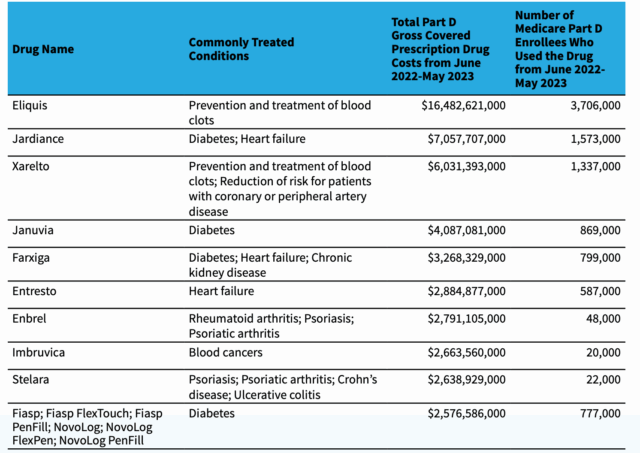
Starting January 1, 2026, pharmacies will be reimbursed under a different model for dispensing certain Part D Medicare drugs. These changes are a part of the implementation of the Inflation Reduction Act of 2022 (P.L. 117-169), which provides Medicare the ability to directly negotiate the prices of certain high expenditure, single source drugs without generic or biosimilar competition. The Centers for Medicare & Medicaid Services (CMS) selected ten drugs covered under Medicare Part D for the first cycle of negotiations for initial price applicability year 2026:

Source: https://www.cms.gov/files/document/fact-sheet-medicare-selected-drug-negotiation-list-ipay-2026.pdf

It is imperative for pharmacies to understand how they will be paid for these drugs and to navigate any cash flow risks that this new reimbursement model brings.

For many years, I have been working with “Family Owned Pharmacies” consultants, who are at the forefront of the changes and issues that independent pharmacies face. Jerry Josephson and Richard Diamond provide tremendous resources and are big advocates of independent pharmacies. This time, they  have prepared an excellent overview of the upcoming Part D changes and a roadmap for independent pharmacies to follow. If you own an independent pharmacy, I strongly recommend reviewing these two documents and sharing them with your staff.

The first document “MFP Explained” explains the program, practical risks, cash flow issues, and what you should do to minimize them.

The second document “Practical Implications” provides valuable tips on how to flag these claims, adjust your workflow and provides a specific script to send to your pharmacy software vendor.

Hope you find these resources valuable and practical. And if you do, feel free to reach out to Richard and Jerry at “Family Owned Pharmacies” and sign up for their free RxOwnerAlerts by emailing Jerry at: jjosephson@ultimabsc.com.

I am pleased to announce that I will be speaking in an upcoming Strafford live video webinar, “DEA Prescription Audits and Investigations: Triggering Events; Process Navigation; Mitigating Noncompliance Risks” scheduled for Wednesday, November 5, 12:00pm-1:30pm EST. Because of your affiliation with our firm, you are eligible to attend this program at half off. As long as you use the links in this email, the offer will be reflected automatically in your cart. I also have ten free passes for the first ten interested people. Please send us a message if you would like a code for free registration.

After our presentations, we will engage in a live question and answer session with participants so we can answer your questions about these important issues directly.

I hope you’ll join us.

For more information or to register >

While California amended its regulations on pharmacy closure earlier this year, many pharmacy owners are still confused regarding the requirements when they are selling files, filing for bankruptcy, or simply closing their doors. So what does California require?

Patient notices:

If the pharmacy closes (sells its files or goes out of business), it must notify its patients at least 30 days in advance of the closure. Notices must be send to the patients that have received a prescribed medication from the pharmacy within the last year. At a minimum, the notice shall include:

  • the name of the patient;
  • the name and physical address of the pharmacy;
  • the name of the pharmacy where patient records will be transferred and maintained; and
  • information on how to request a prescription transfer prior to closure of the pharmacy.

A redundant but important reminder: the pharmacy must reverse all prescriptions that are not picked up prior to the closure.

Board of Pharmacy Notices:

The pharmacy must notify the California State Board of Pharmacy 45 days before the closure. But if the pharmacy is owned by a person or entity owning 15 or fewer pharmacies nationwide, it is exempt from this notice requirement. In case of most independent pharmacies, the pharmacy must only provide a notice of Discontinuance of Business to the Board of Pharmacy.

Public Notices:

Pharmacy should also post a written notice of the closure in a conspicuous location at the entrance to the covered establishment’s premises that includes the planned closure date of the covered establishment. The notice should include:

  • the name, address, and contact information of the pharmacy establishment where any prescriptions will be transferred;
  • the phone number, email address, or internet website where patients may obtain information regarding the process of transferring the prescription to a pharmacy establishment of the patient’s choosing.

Notices to Employees:

If the Pharmacy employs 5 or fewer employees, no later than 30 days before the closure, the pharmacy must provide written notice of the closure to its employees.

If the Pharmacy employs more than 5 employees, no later than 45 days before pharmacy closure, the pharmacy must inform its employees of the closure.

Certain exemptions apply to pharmacies that are owned by individuals or entities with fifteen or more pharmacies.

Additional notices:

Chain pharmacies (that are owned by individuals or entities with 15 or more locations nationwide) must also notify the Employment Development Department, the State Department of Social Services, the local workforce development board of the pharmacy’s city and county.

Within the last two weeks, AstraZeneca sent numerous letters to pharmacies requesting information regarding dispensing and purchasing FARXIGA® in 2024. These letters inform pharmacies that AstraZeneca has identified data discrepancies in billing and purchasing FARXIGA® for each flagged pharmacy.

AstraZeneca alleges that it had perform reconciliation of purchase and dispensing data for each identified pharmacy. The reconciliation has identified material inconsistencies for the calendar year 2024. Specifically, AstraZeneca audits discovered that these pharmacies have not purchased a quantity of FARXIGA® tablets sufficient to support reported dispensing. Dispensing data allegedly was derived from rebate claims submitted by PBMs and plans to the manufacturer and the purchase data was reported by the wholesalers.

Our attempts to reach the manufacturer to better understand the nature of these audits and negotiate a confidentiality agreement before our clients disclose such data were unsuccessful.

I strongly caution pharmacies from volunteering this highly sensitive information as it may backfire due to the reporting requirements that AstraZeneca has with state and federal agencies.

I would like to remind pharmacies that they do not have contractual or legal obligations to disclose their dispensing and purchase data to AstraZeneca. If your pharmacy did receive this request from AstraZeneca, please contact our firm to better understand what could be done to mitigate risks involved.

While pharmacies lose money on dispensing FARXIGA® and may dispense a generic version (making a very small profit but keeping the patient), billing for FARXIGA® under this scenario does not obliviate risks of potential fraudulent claims or non-compliance. Reimbursement issues should be addressed directly with the plans and CMS.

With low reimbursement rates, similar manufacturers’ audits might become more routine and compliance is paramount in order to avoid being flagged for further investigation. Pharmacies should review their billing practices to identify any overpayments or billing discrepancies. Medicare, for example, has strict rules on how and when the overpayment must be returned to the plan.

Please contact your legal counsel or our firm if you have received these requests or any audit/inspection requests pertaining to FARXIGA® from state or federal government agencies.

Business and Professions Code (BPC) § 4113.1 established requirements for a community pharmacy to report medication errors to an entity approved by the California State Board of Pharmacy (“Board”) within 14 days of discovery. The Board approved Institute for Safe Medication Practices (“ISMP”) as the entity to receive and review medication error reports under BPC § 4113.1.

ISMP mailed registration cards at the end of April, 2025. If you haven’t received one, you can obtain it on the BOP’s website or register by going to the ISMP registration page.

According to ISMP, all community pharmacies must be registered by July 24, 2025 in order to be ready for reporting by the BOP’s required date of September 1, 2025.

The BOP’s guidance includes non-resident and outpatient hospital pharmacies within the definition of community pharmacy. However, pursuant to BPC § 4113.1(e), an outpatient hospital pharmacy shall not be required to report a medication error that meets the requirements of an adverse event that has been reported to the State Department of Public Health.

The term “medication error” includes any variation from a prescription drug order not authorized by the prescriber, including, but not limited to, errors involving the wrong drug, the wrong dose, the wrong patient, the wrong directions, the wrong preparation, or the wrong route of administration, but does not include any variation that is corrected prior to dispensing to the patient or patient’s agent or any variation allowed by law.

In addition to reporting any medication errors to ISMP, pharmacies are also required to continue documenting errors as part of their Quality Assurance.

I remember times when pharmacies were able to prepare and submit prior authorizations (PAs) on behalf of the prescribers. Then, gears shifted and pharmacies were allowed to fill out PAs but not to submit them.  Nowadays, the landscape is much stricter and pharmacies are only allowed to prepopulate some information, such as patients’ data. Adding clinical information, signing, and actual submission must be done by the prescriber’s office.

A recent case, which resulted in a criminal conviction and a settlement of over $1 million, illustrates the point.

A Florida pharmacy  – OHM Pharmacy Services (Pharmacy) – pled guilty to health care fraud and agreed to settle to resolve False Claims Act violations by paying $82,000 in restitution, and $1,018,000 in penalty.

According to the settlement, the Pharmacy employed several individuals who held the title Patient Assistance Specialists (“PA Specialists”). Among other duties, PA Specialists worked on completing and submitting PA requests for Evzio, as well as certain dermatological products and other drugs. Part D plans require that clinical information be provided directly by representatives of the prescribing physician’s office.  PA Specialists, however, completed Evzio prior authorization forms in place of the prescribing physicians, including instances in which PA Specialists signed the prior authorization forms without the physician’s authorization. The Pharmacy then submitted the forms to Medicare Part D plans misrepresenting that the forms were coming directly from prescribers’ offices. On dozens of Evzio prior authorization request forms, PA Specialists listed Pharmacy’s fax numbers instead of the prescribing physician’s fax number. According to the government’s allegations, the Pharmacy did so to ensure that insurers would contact them (and not the listed prescribing physician) when communicating about these PAs.  

According to the Pharmacy’s admissions, some PAs contained false clinical information to secure their approval and its payment for the more expensive drug (at the time, Evzio was the most expensive version of naloxone and as such required a PA). For example, PA Specialists filled out and submitted dozens of Evzio PA forms that falsely asserted that patients had previously tried and failed both Narcan and naloxone. Furthermore, the Pharmacy falsely stated on Evzio PA forms that patients had shaky hands or nasal problems.

The case stemmed from a qui tam action (a whistleblower suit). The whistleblower in this case was a former employee of Kaleo Inc (Evzio’s manufacturer). It appears that the manufacturer was aware and even assisted with obtaining PAs. Interestingly, back in 2021, Kaleo Inc settled with the federal government for $12.7 million relating to their submission of false claims for Evzio.

This webinar is geared specifically towards hospital staff, pharmacists, and compliance teams. I have reviewed and analyzed all California State Board of Pharmacy (“Board”) disciplinary actions against hospital pharmacies for the last five years and this is probably the most extensive and labor intense webinar that I have ever prepared for. I am looking forward to sharing it with all who are interested in hospital pharmacy compliance, prevention of disciplinary actions, and best practices of avoiding such.

Disciplinary actions against hospital pharmacies can range from public reproval and fines to license suspension or revocation, depending on the severity of the violation. The Board has broad authority to take such actions for violations of pharmacy law, regulations, or other related statutes. This webinar will discuss the most cited violations against hospital pharmacies and ways to prevent such.

California Society of Health-System Pharmacists is hosting this webinar on May 20th 5pm-6pm. Here is a link to register.

The webinar is a must for hospital compliance teams and staff to assist with compliance risk assessments, education efforts, and auditing procedures.

During the webinar, you will learn about:  

– most cited disciplinary actions against hospital pharmacies in California;

– Board’s inspection procedure and its checklists for such hospital pharmacy inspections;

– preventative measures such as revising internal policies and procedures, conducting internal audits and proper training.

I hope to see you there!

As always, California is at the forefront of inventing new requirements for enforcing compliance with pharmacy laws. This time, the new requirement pertains to Pharmacists-in-Charge (PICs).

Effective April 1, 2025, all proposed PICs are required to complete a training course available on the California State Board of Pharmacy’s website, within two years prior to the date of application to serve as a PIC.

The amended California Code of Regulations (CCR), title 16, section 1709.1 now requires all proposed PICs to submit an attestation statement that include the following:

  • The name of the proposed PIC
  • The proposed PIC’s license number
  • A statement that the PIC has read Sections 4036.5, 4081, 4113, and 4330 of the Business and Professions Code and CCR 1709.1 (please review these sections if you are currently serving as a PIC, as they have recently been amended)
  • A statement identifying the date that the proposed PIC took the board’s training course
  • A declaration signed under penalty of perjury that the statement contains true information.

The training course could be accessed on the BOP’s website and is free of charge. It provides an overview of pharmacy law related to the position and the responsibility of a PIC. The course also discusses tips on how to prepare a pharmacy for an inspection by a California State Board of Pharmacy Inspector and provide resources for the PIC to aid in their supervision and management of a pharmacy. One hour of CE will be awarded for completing this training, but does not count toward the required 2 hours of CE for Law and Ethics.

Taking this course is recommended for all PICs (even if not required). In my experience, many PICs are still confused about their responsibilities and oversight of the pharmacy. The course is beneficial to all PICs, pharmacy owners, and pharmacists as it covers such important requirements as:

1) Legal requirements of the role of a PIC;

2) Legal prohibitions for a pharmacy owner to subvert the PIC

(3) Legal requirements/Overview of the self-assessment process

(4) How to prepare for an inspection

(5) Top violations that result in a Cite and Fine.

If you a pharmacist who considers becoming a PIC, a pharmacy owner, or a PIC, this course is a must and not because it is now required but also because it provides a condensed version of major legal requirements that pertain to pharmacy operations.

OptumRx has recently announced that it is easing its prior authorization (PA) requirements on about 80 drugs for renewed prescriptions. The program is planned to start on May 1, 2025 and will include various drugs such as Aimovig, Kalydeco, and Praluent. The list of drugs is anticipated to increase based on the success of the pilot implementation this year. OptumRx estimates that the program would eliminate about 10% of all pharmacy prior authorizations.

The change is likely to streamline dispensing of the initial 80 drugs, making it easier and less costly for the pharmacies to fill them.